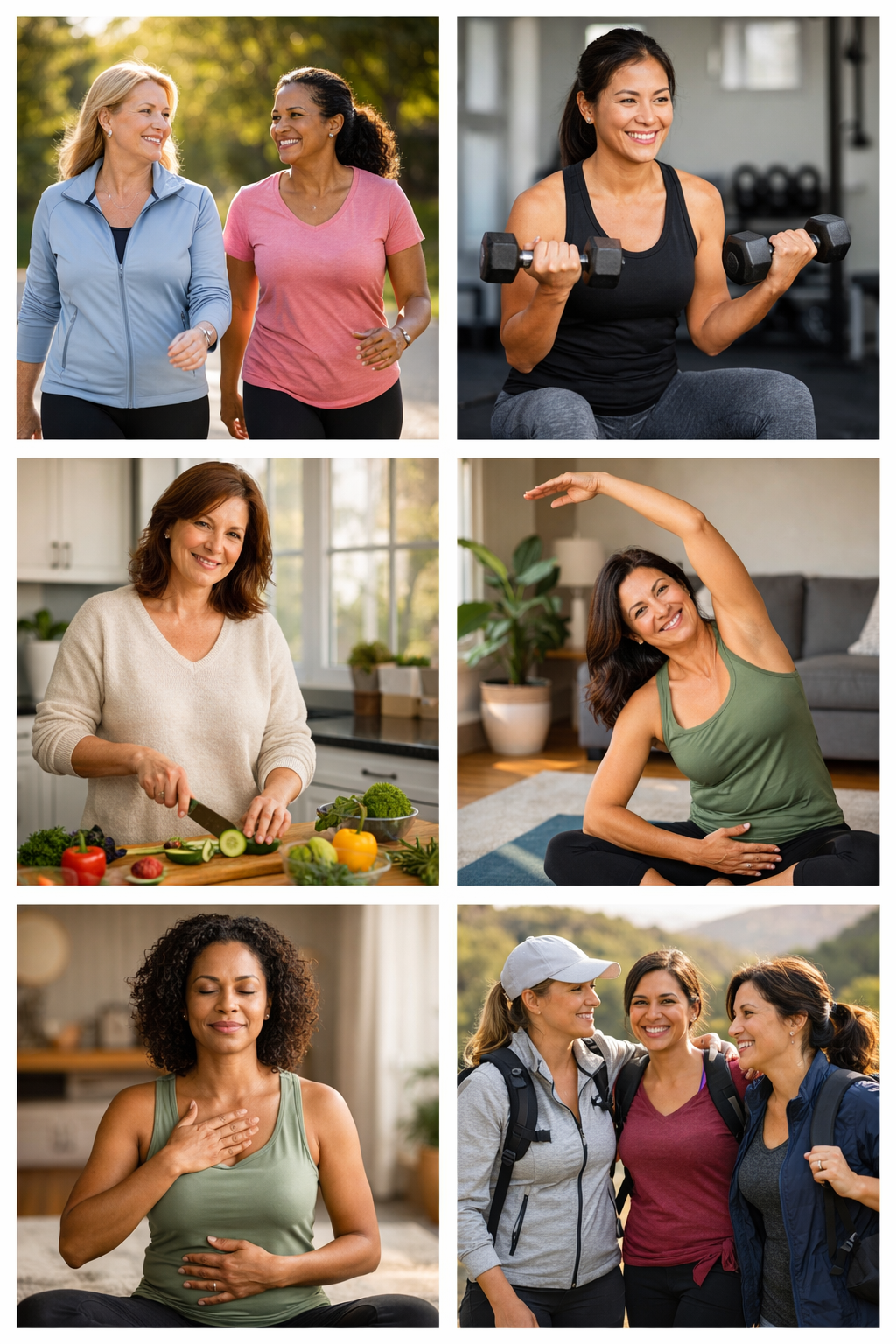
If you are trying to age well as a woman, not just live longer but stay strong, clear-minded, mobile, and independent, this is a powerful moment to focus on what the evidence is actually saying. The most useful direction is practical, not extreme: build strength, protect mobility, support mood and cognition, and use measurable habits you can sustain.
A few findings are especially important. In healthy older women, combining resistance training with essential amino acid support outperformed either one alone for muscle-related outcomes. For busy schedules, weekend-focused activity still beat inactivity, though regular spread across the week appears stronger. For nutrition, “more” is not always better, and context matters, including cooking style and overall dietary pattern, not just single add-ons.
Mood and cognition also deserve center stage. Studies continue to show that social engagement, physical activity, and early mental-health screening are meaningful protective signals. Memory and brain-risk assessment tools are improving, but they should guide better follow-up, not create fear or overdiagnosis from one isolated score.
On biological age, the signal is promising but must be interpreted responsibly. Wearable and imaging-linked age models can help with trend-tracking and earlier risk awareness, but they are not stand-alone diagnoses. Their best use is to support timely, grounded behavior changes and better conversations with clinicians.
Practical takeaways
- Make strength training a weekly non-negotiable.
- Use protein strategically for mobility, avoid “more is always better” thinking.
- If life is busy, start with concentrated exercise and progressively distribute activity through the week.
- Monitor blood pressure carefully and act early.
- Protect brain and mood through movement, social connection, and early screening when needed.
- Treat biological-age tools as dashboards for trend direction, not final verdicts.
Healthy aging is highly trainable. The strongest long-term strategy is steady, personalized, evidence-led action, and the willingness to stop what is not working while doubling down on what does.
Reference papers
- Combined resistance exercise and essential amino acid intake enhance follistatin/myostatin ratio and muscle fitness in older women: a randomized controlled trial. (PMID: 41863133)
- Association between usual protein intake and muscle function in older U.S. adults: a target-trial emulation using NHANES 2011-2018. (PMID: 41978913)
- Accelerometer-derived "Weekend Warrior" physical activity and all-cause and cardiovascular mortality across CKM stages 0-3. (PMID: 41978541)
- A scalable step count-based predictor of biological age: development and validation of MoveIt! Age in community-dwelling adults and geriatric rehabilitation inpatients. (PMID: 41241677)
- Predicting healthspan and disease risks through biological age. (PMID: 41314863)
- Dietary Advanced Glycation End Products (dAGEs): Pathogenesis and nutritional strategies for health longevity-A critical view. (PMID: 41622099)
- The role of dual-tasking, mindfulness, and rumination on gait in older adults with chronic pain. (PMID: 41671741)
- Baseline characteristics of the SINgapore GERiatric Intervention Study to Reduce Cognitive Decline and Physical Frailty (SINGER) multidomain dementia prevention randomized controlled trial and insights from the recruitment process. (PMID: 41943481)
- Relationships between fine memory discrimination and tau burden in two independent cohorts of older adults. (PMID: 41672403)
- Accelerated epigenetic age in hypertension: a systematic review and meta-analysis. (PMID: 41514024)
Educational content only. Not medical advice.